Yvette Amos – What Happened After Her Viral BBC Wales Interview (2025 Update)
Introduction
You may have heard the name Yvette Amos — but not for a usual reason. She became famous because of a surprising background detail during a serious TV appearance. Her name spread fast. People searched “what happened to Yvette Amos” or “Yvette Amos BBC.” But who she really is goes beyond that viral moment. In this article, we explore her story, what she talked about, what went wrong, and what we know about her life now. We also reflect on what that viral moment shows about the internet, media, and real people.
Who Is Yvette Amos?
Before going viral, Yvette Amos was an ordinary person living in or near Cardiff, Wales. Western Business+1 She was not a celebrity, a public figure, or a recurring media guest. Newsbro+1 People who looked her up hoping to find a full biography or “Yvette Amos Wikipedia” mostly found blank pages — because she had no public profile before the event. Newsbro+1
She had worked — before the pandemic — in jobs like bar work and research. AOL+1 When the pandemic hit, like many others, she experienced challenges with employment. AOL+1
In short: Yvette Amos was a regular person, speaking out about real-life problems. Her story became famous — but she did not choose fame.
The Interview That Changed Everything
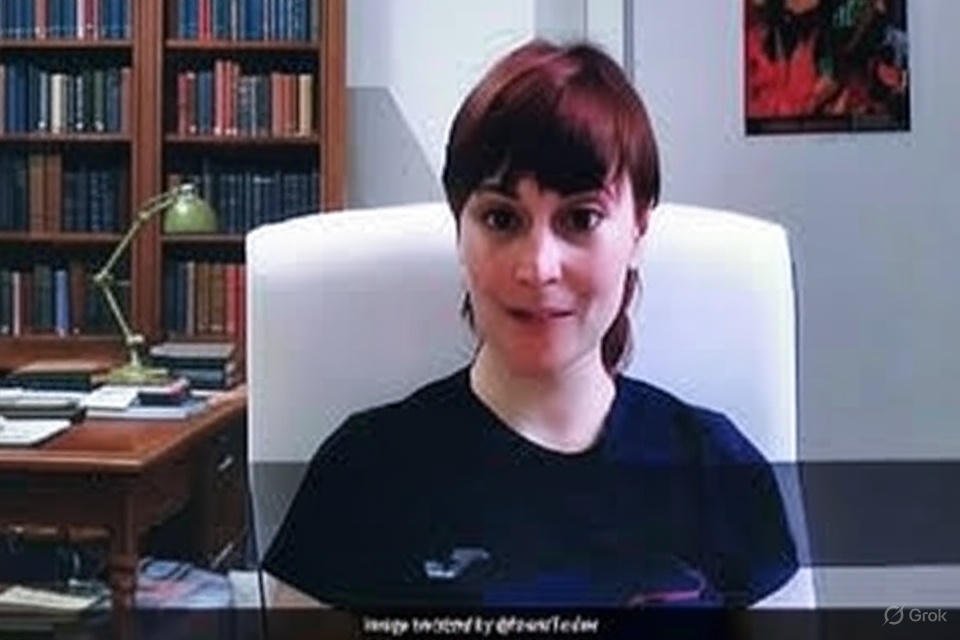
In January 2021, Yvette Amos appeared on a programme from BBC Wales Today. She was asked to share her experiences with unemployment during the COVID-19 pandemic. The Independent+2UK News Pulse+2
Her words were serious and personal. But almost immediately, something unexpected happened: a large, unmistakable object — widely described as a sex toy — was visible on a shelf behind her. The London Economic+2The Independent+2
As she spoke, viewers first noticed the object, then screenshots started circulating on social media. The interview clip quickly went viral. Instead of people focusing on her message, many focused on that background detail. UK News Pulse+27NEWS+2
Suddenly, Yvette Amos was everywhere — not because of unemployment, but because of that weird, awkward background.
Social Media Goes Wild: Reaction & Memes
When images and clips of her interview spread online, the reaction was loud. People joked, laughed, and made memes. Some called the bookshelf the “greatest guest background on BBC Wales news.” The London Economic+2The Indian Express+2
Some viewers wondered if it was a prank, a joke, or a real oversight. Others felt embarrassed for her. There was a lot of humor — and a lot of mockery. Still, many defended her right to speak, saying home environments during lockdown were messy for many. AOL+2The Indian Express+2
In a moment, her name stopped being about unemployment or hardship. Instead, it became a case study: “What happens when private life meets public broadcast?”
Media Coverage & Global Spread
Mainstream media picked up the clip within hours. Newspapers and online sites worldwide ran headlines about the bizarre bookshelf. The Indian Express+2The Independent+2
Even though the interview was for a local UK audience, international outlets covered it — showing how quickly media today spreads viral content. UK News Pulse+1
Still, interestingly, neither Yvette Amos nor BBC issued major public statements afterward. There was no big apology. No follow‑up feature. Just a viral clip — and then silence from official sides. Newsbro+1
What Did Yvette Amos Say or Do After the Viral Moment?
If you searched “Yvette Amos response,” you mostly found silence. According to available sources, she did not make a public statement to explain or comment on the background object. Newsbro+1
Some reports say she declined to comment when approached at her home. The Indian Express+1
Because she didn’t speak publicly about it after, many assume she wanted to move on quietly. That decision itself has earned some respect — some people admired her for not chasing attention or fame out of a mistake. Newsbro+1
| Read More Informative Blogs Like These: TheLowdownUnder Travel |
What Happened to Yvette Amos After — Where Is She Now?
If you search for “Yvette Amos now,” there is no verified public information about a large public life change. Reports suggest she returned to relative privacy. Newsbro+1
There were no public interviews, no social‑media presence explanations, and no follow-up news about her — at least as of what’s publicly documented. Newsbro+1
Many media‑watchers call her a “one‑time internet phenomenon” who chose not to turn a viral moment into permanent fame. Some found that admirable: she got attention, and she walked away. UK News Pulse+1
Why This Matters: Lessons on Internet Fame & Privacy
Yvette Amos’s story shows how fragile public image can be in the digital age. A serious interview — about real hardship — turned into a meme because of a background object.
This shows:
- How small details in home settings can overshadow the main message.
- That internet culture often values humor or shock over empathy or content.
- That privacy can be involuntarily lost when ordinary people join live media.
- And how the pandemic era — with remote interviews and video calls — made such mishaps far more common.
Her story is a reminder: online or on camera, what’s behind you sometimes matters as much as what you say.
What We Actually Know vs What We Don’t
| We Know | We Don’t Know |
|---|---|
| She lived in or near Cardiff. Western Business+1 | Her full public biography details are not available. |
| She appeared on BBC Wales in Jan 2021 to talk about unemployment. The Independent+1 | Exact info about her life before or after is limited. |
| Her interview went viral because of a shelf item seen behind her. The London Economic+1 | She did not release public statements after — so her feelings about the incident are unknown. |
| She did not become a public figure intentionally. UK News Pulse+1 | We don’t know if she regrets the viral fame or how it affected her privately. |
FAQs
Q1: Who is Yvette Amos?
Yvette Amos is a woman from Wales who appeared on BBC Wales Today in January 2021. She spoke about unemployment during the pandemic. 7NEWS+1
Q2: Why did she go viral?
Because a bright, explicit‑looking object was visible behind her during the interview. That detail got more attention than her message. The London Economic+2The Independent+2
Q3: Did she respond after the viral moment?
No public statement or comment from her is documented. She reportedly declined comment when approached. The Indian Express+1
Q4: What was she talking about in the interview?
She spoke about her experience with unemployment and how the pandemic had affected her job and life. AOL+1
Q5: Does she now have a social media presence (Instagram)?
As of public records, no verified social media account (like a public Instagram) linked to her is known. Searches like “Yvette Amos Instagram” mostly return meme pages or re‑shared screenshots. Newsbro+1
Q6: What happened to her after the internet fame?
She appears to have returned to a private life. There is no documented follow-up interview, public project, or continued media presence. Newsbro+1
Conclusion: More Than a Meme — Respect for Real People Behind Viral Moments
Yvette Amos reminds us what can happen when private life collides with public media. In a blink — a virtual interview — someone speaking about serious life issues found herself as the butt of jokes.
But beyond the laughs, there’s a human being: someone with real struggles, real dignity, and real privacy. Her story shows how digital life can be unpredictable and sometimes unfair.
If you think about this again — before judging a video, a screenshot, a viral moment — remember: there’s a real person behind it. And sometimes, respect, empathy, and kindness are what matter more than the joke.